Why we need an open alternative to Linkedin?
LinkedIn’s dominance in the professional networking space has led to the usual monopolistic practices that make it vulnerable to disruption. such as reduced Value as a User, increasing Antitrust due to monopolistic practices, Money-squeezing Business plan that forces you to use Linkedin Premium, Spam, AI/irrelevant Content, Ages since the last actual useful feature, and overall deteriorating Platform Quality.
This has led to many users including me to stop using Linkedin, not because we’re not interested in a platform for professional Networking, the opposite actually, we need a space to learn and share our Career Experiences, but the current solution stopped providing that value.
The big problem is, what’s the alternative?, like I can name an alternative to Tiktok, but I really don’t know any popular alternative to Linkedin, why? Unlike short-content, when Tiktok emerged, Many Companies saw an increasing demand to this new type of social content, which resulted in almost every major platform having some sort of a short-content thing …Instagram reels, Youtube Shorts, even Facebook implemented this. and that sparks the question: There’s an increasing Demand, but why hasn’t a popular alternative to Linkedin emerged yet?
Issues of Linkedin
Linkedin’s design and monetization strategies have evolved over time, impacting users job searches and professional identities. These often have negative psychology consequences, like FoMO (Fear of Missing out)
Platform Design
To understand why LinkedIn feels broken for the average user, we have to look at how it was built. It is not a neutral public utility for employment; it is a meticulously engineered product designed to extract data, time, and subscription fees.
1. Business Plan LinkedIn’s foundation was built on aggressive growth hacking rather than organic professional necessity. As detailed in this video, founder Reid Hoffman employed a specific strategy to manufacture critical mass: tapping into users address books. Through an Outlook plugin, the platform encouraged users to spam their entire contact lists—often unintentionally—creating a network effect driven by the fear of being left behind.
However, the core issue with LinkedIn’s business model is a conflict of interest regarding job seekers. that highlights a stark reality: “If you have a job, you don’t need the subscription.” Therefore, it is financially beneficial for LinkedIn to keep users in a state of searching. The platform has evolved from a simple digital resume site into a tiered pay-to-play system (Premium, Business, Recruiter), where users are often sold the illusion that paying a monthly fee will bypass the structural hurdles of the job market. Ultimately, the design prioritizes employers and recruiters—who pay thousands for access—over the individuals providing the data.
2. Algorithm Around 2012, LinkedIn pivoted away from being a static professional database and adopted the mechanics of social media giants like Twitter and Instagram. The goal shifted from “connection” to “engagement,” because engagement drives ad revenue.
Consequently, the algorithm does not reward professional competence or quiet efficiency; it rewards “controversy.” The platform is now polluted with empty bragging, detached from reality posts, “As an X you should do Y”, and AI-written slop because that is what the algorithm pushes to the top. To be seen by recruiters, users are forced to treat their careers like content creation, maximizing visual appeal and using buzzwords rather than showcasing actual skills. This shift has turned the job market into a viral competition where the most engaging storyteller wins, regardless of their actual qualifications.
3. Psychological Effect The most damaging aspect of LinkedIn’s design is the psychological toll it throws on its users. The platform operates on FoMO (Fear of Missing Out), convincing users that if they don’t participate in the “corporate employee playbook,” their careers will wither.
This creates a “parallel dimension” to the actual workplace, a sanitized, toxic-positive environment where users must perform a fake persona and often dishonest version of themselves to compete in a market saturated with “ghost jobs” (fake listings used to harvest data or project company growth). The psychological cost is immense, users are expected to “humble brag” about long workdays or write posts thanking companies for firing them, stripping away their authentic identity to fit as the “perfect employee”. Like you’re required to thank who has fired you!
Why Talent leave Linkedin
While many may not notice this type of Talent, the sentiment toward the platform has shifted from professionalism to memes about Linkedin. We don’t need expensive market research to see this, we just have to look at community engagement. On Reddit, r/linkedin a place for regular/serious discussion has ~150k members. Meanwhile, r/LinkedInLunatics, a community dedicated solely to mocking the problematic content on the platform, will reach million subscribers soon.
Social Side
The Social aspect of the network has become an attention economy that repels serious professionals.
- Spam (Emails & DMs): Users are bombarded from spammy Recruiters sending the same message in bulk to many Talents, often irrelevant, in addition to the periodic DM from a person-like account acting like a recruiter trying to sell you Linkedin Premium, but they just waste your time clicking on a notification.
- AI-content: The feed is getting increasingly populated with LLM-generated posts, often with emojis of course, or the cartoonish-styled Diagrams/Memes/Images generated with AI. I even managed to find this paid tool to post AI slops for you.
- Toxic Positivity: as mentioned previously.
Job Side
For a platform built on employment, the actual mechanics of finding work have become one of the site’s biggest frustration.
- Ghost Jobs: A staggering 25% of listings on the platform are likely fake source, posted by companies to project growth to investors or harvest applicant data with no intention of hiring.
- The Easy Apply approach: By reducing applications to a single click, LinkedIn encouraged indirectly a “shotgun approach” where candidates spam thousands of applications. While convenient in theory, in practice, it buries qualified talent under a mountain of noise, making it nearly impossible to stand out without paying for premium features to jump the queue.
Lack of genuine Connection & Networking
- Authentic Networking has disappeared: The incentives have shifted from “connection” to “audience.” The algorithm penalizes quiet competence and rewards loud, viral and controversial behavior. You can no longer just be a good accountant or engineer… the platform demands you also be a content creator and an influencer to remain visible.
- Professionals Leave and use niche Networks: Github for Devs and even Twitter or Bluesky, Dribbble or Behance for Designers, and more.
Pain points (Recruiters)
When I first joined Linkedin, I immediately noticed that almost all recruiters have the Premium Badge, I had multiple theories like, Linkedin is shoving premium accounts as recommendations since I’m new here, or premium is so valuable to Recruiters that they all pay for it, but as time went further I kept seeing the same pattern, up until this
“Recruiters are kinda forced to have Premium”
Said a Recruiter I met in a local career fair when asked about Linkedin & her work, LinkedIn Premium (especially Recruiter Lite or Recruiter Corporate) unlocks features critical for any HR, such as:
- InMail Credits
- Useful Search Filters, notice the word “useful”
- Free Job postings
- The Golden Premium badge of course
You might say that’s a great business plan design, because unlike Talent who are not always working, thus don’t have a stable income, if Recruiters are looking for Talent that means they’re a full-time employee with a salary that Linkedin can squeeze, or a small-business/Startups with Money to spend. Sure, there’s truth to that, to find the pain point let’s play a Game
Recruiters have a choice between Recruiter Lite & Recruiter Corporate plans, the corporate one is obviously better and more expensive.

Take a guess at how much money Lite plan users have to pay each month for these features:

- 20+ advanced Search filters
- 30 InMail Messages
- Free Job Posting
- Access to third-degree connections
- Others that are basic in my opinion

Choices are:
1. $50/m
2. $20/m
3. $100/m
4. $150/m
Answer is $150/m 🤯🤯🤯 source
This pricing is way too bizarre and can only happen when there’s no real alternative to this space, the issue isn’t the price itself, rather than the over-valued features that they offer, For small businesses or independent recruiters, the pricing may not always justify the ROI, especially if roles are filled through other channels.
I haven’t even mentioned the Recruiter Corporate plan, which is basically the same with more sane limits, sprinkle some basic useful features, and ATS Integration…for $800/m, just wow.
Again, this only happens because there’s no alternative, and some are forced to participate in this space, not everyone can ditch his/her account like Instagram or any other Social Media, almost everyone needs a Job, and the culture around us convinces most to use the Industry standard.
To add on the Pain points, I’ll keep it short by saying you’re not guranteed to have a decent user experience anyways, here’s an answer from someone on the internet replying to a Recruiter Lite user asking about the search filters weaknesses:
“It has major limitations. In my experience getting good at scanning pages quickly is the best remedy, you can’t rely on their search to find a perfect fit. I keep my search broad, ignore things like YOE (in the search filter).”
“To add, most regular users (the people you’re searching for) don’t add all of their skills, they dont write in-depth summaries of their current or previous roles, etc.. so using too many key words actually eliminates them even though they may have exactly what you need.”
I can confirm the last section because I was one of them back when I had the App, basically it’s because the process of adding new sluggish info and old, I’ll either forget about that or be lazy since the UI is confusing and there’re are many things to change normally (Certifications, Skills, Experience, role, …etc), the only things I can allocate time to change are my resume and new roles only. What if we skip this whole process and input our resumes from time to time?
Pain points (Companies)
Instead of that silence that Talent see, companies deal with noise, up to a point where recruitment is surprisingly inefficient in my opinion despite the high pricing.
In the Dev space as an example, if you want to find the top talent to fill up a role, you either have to endure the process of eliminating thousands of application using an ATS that might eliminate the perfect candidate, then pray that the one you’re looking for has applied to this Job and passed ATS, or or or you can use a platform that focuses on this issue like G2i
My Personal Experience
For me, It started with the instant Linkedin Premium DM and and people treating professional connections like social media followers. I wasted hours applying to “ghost jobs” or roles with 500+ applicants that never went anywhere, it feels more like Facebook now. The EMAILS, I can say that I hate Data Science from the amount of Spam I got in my inbox, Linkedin is permanently living in my spam/junk folder since years, all that without mentioning the dumb “You appeared in X searches” that is totally useless.
The content is even worse. My feed is full of bad programming posts clearly written just to please the algorithm, not to help developers. It is jarring to see the difference between the real people I know and the fake personas they are forced to adopt online.
Feed Test, I’ll login and let the first 5 posts do the job:
- A suggested post filled with emojis + AI generated image, possibly AI generated
- An irrelevant post to Linkedin entirely appearing because a Connection liked it
- A suggested post by a CEO of an AI security Company showing a Video to talk about the dangers of AI to market his product
(Linkedin refreshed feed on its own while writing for some reason, lol)
- A suggested Post saying that AI is the future and shows an AI Art slop video
- A post a connection liked (skipping this one)
- An exact repost of a post I saw today from a different account (maybe also a repost), talking why OpenAI will fail and Anthropic will win with an cheap Analysis that repeats old news about this Week just to gain attraction, and with phrases like “empires fall fast”, “The AI race …” instead of an actual Analysis with factual Data.
Overall, LinkedIn has been useless for me. Every programming job, founder introduction, and piece of real career advice I have received came from in-person meetings or other online communities. Not once did it come from LinkedIn.
Why hasn’t a popular alternative emerged yet?
I tried searching for alternatives, and by an one I mean a platform that combines connections, social side, and job hiring infrastructure in one place, I couldn’t find any, the closest thing was Xing, I personally use and so far was happy with the experience, however it’s mostly known in Europe, and the Social side isn’t mature enough.
One of the reasons a true competitor hasn’t dethroned LinkedIn yet is justified by the immense financial and structural moat dug by its owner. In 2016, Microsoft acquired Linkedin for 26.2 Billion source, Today, Linkedin is a massive revenue engine.
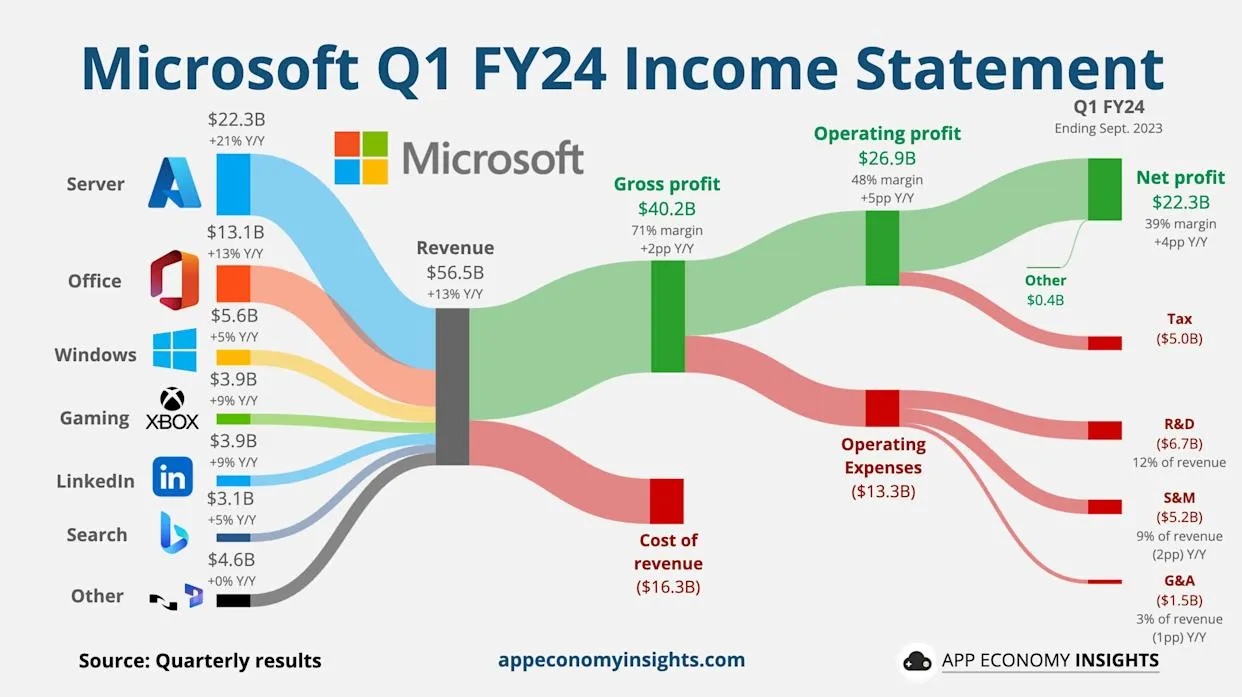
This financial scale creates a nearly impossible barrier for startups. Microsoft has the resources to run LinkedIn at a loss indefinitely if it had to (though it is profitable), and it can outspend any competitor on infrastructure, AI integration, and marketing. The result is a platform that doesn’t need to be good to survive, it just needs to be there.
The Blueprint for a Better Network: User-First, Open-Source, and Open-Social
To build a genuine alternative to LinkedIn, we cannot simply replicate its features with a better UI. We have to dismantle the exploitative business model that lies at its core. The next generation of professional networking platforms must be built on three non-negotiable pillars: User-First design, Open-Source architecture, and an Open-Social foundation.
1. User-First: The Anti-Extraction Model LinkedIn’s current design is adversarial: it profits when you fail to find a job quickly because that keeps you scrolling and subscribing. A User-First model flips this incentive. The platform must act as a utility. The goal should be to connect talent with opportunity as efficiently as possible—to get you off the app, not keep you addicted to it. By prioritizing the user’s success over “time-on-site” metrics, we eliminate the need for engagement farming, toxic positivity, and the algorithmic pressure to perform a fake persona.
2. Open-Source: Trust Through Verification We currently trust our entire professional reputations to a black-box algorithm that arbitrarily decides who sees our work. We don’t know why some posts go viral, why some applications are buried, or how our data is being used to train AI models. An Open-Source approach ensures total transparency. It means the community can audit the algorithm to ensure there are no “pay-to-win” mechanics or shadow bans. It guarantees that the platform isn’t secretly verifying “ghost jobs” to inflate metrics. In an era of AI slop and deepfakes, open code is a way to prove that the platform is operating honestly.
3. Open-Social: Ownership of Your Identity The reason is “lock-in”, if you leave, you lose years of connections. This was one of the classic problems of social media that helped ensure the dominance of Meta, Youtube, Linkedin in the past 10 years. However, Modern Problems require modern solutions, and modern tech have solved this.
The solution lies in the AT Protocol (Authenticated Transfer Protocol). By building on this “open-social” standard, we grant users true ownership of their social graph. Your connections, your reputation, and your content belong to you, not the server hosting them. If the platform ever degrades or tries to exploit you, you can pick up your digital identity and move to a different provider without losing your network. This destroys the fear of professional irrelevance (FoMO) because your network becomes a portable asset you own, rather than a privilege you rent from a corporation.
We already have an example, Bluesky, a Twitter alternative that already hit 1st place previously as the most trending app on the App store, powered by atproto, it showcases in a meaningful way how we can have our Twitter/X/Threads and at the same time own our Data, this protocol is really impressive and deeply underrated.
TL;DR
So from my research and rant on this issue, I managed to summarize the core problems that Linkedin have which any alternative must solve:
- The Algorithm
- Platform Design
- The Poor UX
- Pay-to-Play Business Plan
- Slow Inefficient Process that Users and Recruiters go through.
- Privacy Concerns & Data Ownership
The Recipe
For an alternative in this Age of modern Tech is:
- No focus on Revenue at all, especially in early stages (don’t repeat Linkedin’s mistake)
- Above means Open-source
- Must adhere to Open-social, in other words, Users can own their Data
- Must solve real problems, and Modern Technology enables that
- Everything should be rethought
- Anti-spam, anti-dishonest design, reward authentic content/users
- Meaningful AI usage
Why This Makes LinkedIn Vulnerable?
Some think that it’s impossible to challenge a dominant platform like this with all the revenue and power it has, however the past says otherwise, Linus Torvalds disrupted back then the dominant solution for Version Control with his own open-source free software, now nobody knows that old solution’s name, and ironically they’re even open-source now.
This is why I say everything mentioned in this page makes Linkedin stack-changeable. Users are becoming more aware of privacy issues and monopolistic practices, leading to dissatisfaction and openness to alternatives. There is a growing demand for open-source, user-controlled platforms that prioritize privacy and transparency over monetization.
All it takes is a community and focus on building a platform that serves all of its users: Talent, Recruiters, and companies, all alike, rather than advertisers or shareholders.